July 10, 2003: Shuttles to fly no earlier than March
July 10 — The space shuttle fleet will return to flight no earlier than next March, more than a year after Columbia’s loss, according to a revised NASA timeline obtained by MSNBC.com Wednesday. Earlier timelines had indicated flights might resume as early as December, but most experts never expected the space agency to meet that schedule.
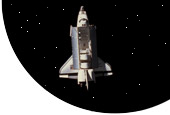
THE CURRENT PLAN, contained in a NASA planning document that was obtained by NBC space analyst James Oberg, calls for shuttle personnel to prepare for the launch of Atlantis no earlier than March 11. The mission, commanded by astronaut Eileen Collins, would bring a long-term replacement crew to the international space station, as well as supplies and spare parts for the orbital outpost.
The internal document reflects a change from the previous planning date of Dec. 18 — and it also reflects NASA Administrator Sean O’Keefe’s view that it was more likely to take until February or March to get the shuttle fleet ready for flight. Even when NASA announced the December contingency date last month, many observers said the agency might need more time to address all the concerns likely to be raised by the Columbia Accident Investigation Board.
On Wednesday, the board said it would issue its final report on the disaster in August, a full month later than planned. Board spokeswoman Laura Brown said the extra time was required for “editing all the material and trying to do a thorough job, rather than trying to rush to the finish line.”
The internal document, which was dated Wednesday, serves as a guide for flight preparations within NASA rather than a firm schedule for resuming flight. Thus, the Atlantis mission could well occur later than March 11.
The timeline for the follow-on flights was stretched out even more:
Endeavour’s STS-115 — which was to have brought a new truss segment, solar arrays and batteries to the station — was originally slated for no earlier than Jan. 22. The new timeline specifies a launch date no earlier than July 29, 2004.
Atlantis’ STS-116 — which was to have featured a crew rotation on the space station — had been targeted for launch no earlier than May 13, 2004. The new date is no earlier than Sept. 16, 2004.
Endeavour’s STS-117 — which was to have brought yet another truss and additional power-generating arrays to the station — had its “no earlier than” date moved back from July 29, 2004, to Dec. 18, 2004.
The actual schedule for NASA’s resumption of human spaceflight will be determined by the agency’s response to the investigative board’s recommendations. NASA is certain to retool the shuttle fleet and revise its procedures in the wake of the Feb. 1 breakup of Columbia during re-entry. All seven of Columbia’s astronauts died in the tragedy.
Some of the recommendations already have been made public: The panel has called on NASA to improve its testing procedure for the shuttles’ thermal protection system, to make on-orbit imaging a standard requirement for each shuttle flight, to develop a procedure for inspecting the shuttle during flight and repairing it if necessary, and to upgrade its imaging capability for the shuttle’s ascent to orbit.
The board’s final report is expected to deal with NASA management and cultural issues as well as the technical matters that led to Columbia’s destruction in the skies over Texas.
The board has attributed the cause of the accident to the 1.5-pound (700-gram) chunk of foam insulation that broke off Columbia’s fuel tank during liftoff and slammed into the leading edge of the left wing. The resulting hole allowed deadly hot gases to penetrate the shuttle during atmospheric re-entry.
‘SMOKING GUN’
Earlier this week in San Antonio, accident investigators replicated the foam strike in a test that proved just how dangerous the lightweight insulation can be. A block of foam punched a 16-inch hole in a wing replica made of real shuttle parts.
The foam struck roughly the same spot where insulation that broke off Columbia’s big external fuel tank during launch smashed into the shuttle’s wing.
“We have found the smoking gun,” said Scott Hubbard, a member of the investigation board.
The 1.67-pound (750-gram) piece of fuel tank foam insulation was shot out of a 35-foot (10-meter) nitrogen-pressurized gun and slammed into a carbon-reinforced panel removed from shuttle Atlantis.
The countdown boomed through loudspeakers, and the crack of the foam coming out at more than 500 mph (800 kilometers per hour) reverberated in the field where the test was conducted.
Sixteen high-speed cameras captured the impact, and hundreds of sensors registered movements, stresses and other conditions. The impact was so strong that it damaged one of the gauges.
NBC space analyst James Oberg and The Associated Press contributed to this report.
|