 |

Loading |
 |
 |
||||||||||||||||||||||||||||||||||||||||||
|
||||||||||||||||||||||||||||||||||||||||||
 |
||||||||||||||||||||||||||||||||||||||||||
 |
||||||||||||||||||||||||||||||||||||||||||
 |
||||||||||||||||||||||||||||||||||||||||||
 |
||||||||||||||||||||||||||||||||||||||||||
 |
||||||||||||||||||||||||||||||||||||||||||
 |
||||||||||||||||||||||||||||||||||||||||||
 |
||||||||||||||||||||||||||||||||||||||||||
 |
||||||||||||||||||||||||||||||||||||||||||
 |
||||||||||||||||||||||||||||||||||||||||||
 |
lectures
|
||
These lectures from James Oberg on a wide variety of space-related
topics are entertaining and enlightening. They can be tailored
in length from 30-40 minutes to two hours, and can use 35-mm
slides or powerpoint projectors. |
||
|
||
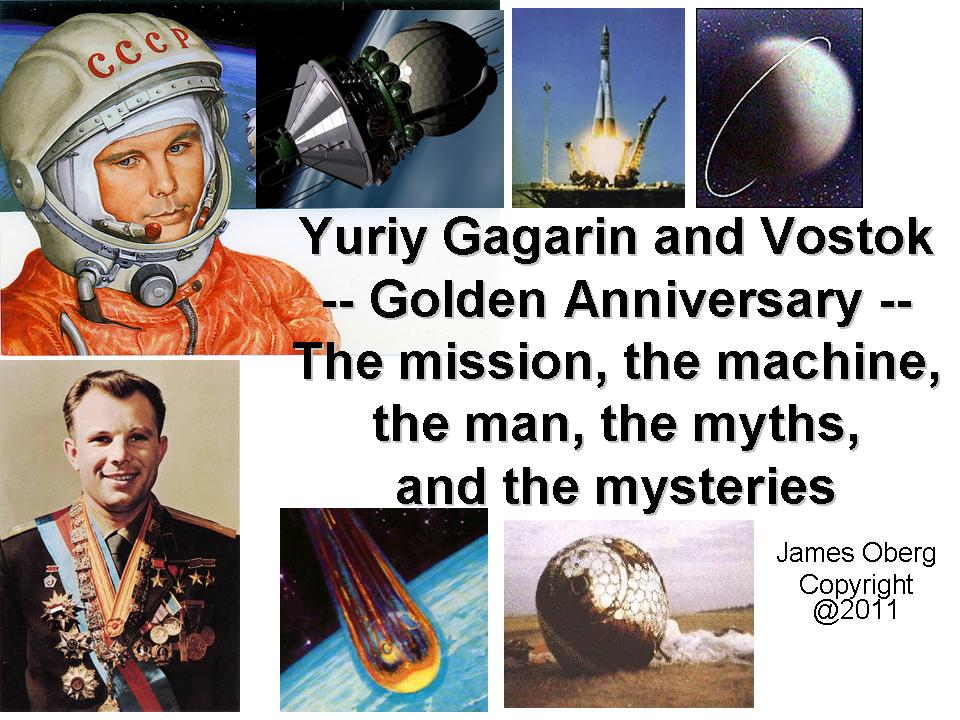
Gagarin's 50th Anniversary
|
||
| Seeing the earth from space - coming soon | ||
| Spaceflight
Safety – It’s Not Just ‘Rocket Science’ – As the ‘point of the spear’ of American
science and technology, spaceflight has always been inherently
risky. But NASA’s bitter experience with the loss of
two space shuttles (each with seven astronauts) and other
expensive space probes provides lessons for anyone back on
Earth who must deal with high-technology hazardous operations.
This is because ‘space safety’ involves the application
of principles also common to Earth safety, and because NASA’s
greatest disasters occurred not because space itself was too
hard, but because segments of NASA’s teams were too
soft – they forget lessons that earlier generations
had learned, often at high price in time, treasure and lives.
As NASA must ‘fight the forgetting’ and revive
its safety culture, workers and officials in other industries
can benefit by seeing the common thread that runs through
‘hazard-control’ in space and on Earth. Example Slides Adobe PDF (large file size) |
||
| “Cosmonauts
and Cosmo-NOTS -- the history of Soviet space photographic
forgeries and the lessons for the future.” In
the early years of the Space Age, the Russians retouched dozens
of photos of their cosmonauts to conceal unflattering information
about accidents, setbacks, and misbehavior -- but Western
investigators (led by Oberg) found original versions of the
images and tracked down what the erased cosmonauts had really
done, or had done to them. Example Slides Adobe PDF (large file size) |
||
| Yasniy
of Siberia -- The World’s Newest and Most Profitable
Spaceport”. Since 2006 a Russian-Ukrainian
commercial space launch team has been launching satellites
for Western customers from an active Russian nuclear missile
base in southwestern Siberia. Oberg is the only space journalist
to attend such a launch, and he describes the facility, its
history and its future, is revelations and its secrets, and
his investigation that identified exactly which retired missile
silo is being used for these missions. Example Slides Adobe PDF (large file size) |
||
| Russia’s
Space Program at 50 – Where Now? Fifty years
after Sputnik and more than a decade after the collapse of
the Soviet Union nearly bankrupted their space industry, the
Russian space program possesses significant resources for
future expansion. It maintains its preference for evolutionary
space designs – its human spacecraft, Soyuz, is based
on a 40-year-old design carried into space by a rocket that
evolved directly from the one that carried Sputnik on October
4, 1957. Major portions of its space program – science
missions, weather satellites, reusable boosters – died
with the USSR, but its new strategy relies on international
partnerships to provide funding and technology that its own
government remains unable to provide. Example Slides Adobe PDF (large file size) |
||
| Tourist
Guide to the Baykonur Cosmodrome – Western
visitors have become common at the formerly top secret spaceport
in Central Asia, but the secrecy there has only slowly faded.
Only in the last few years have reliable maps, high-resolution
commercial space imagery, and open access to historical memoirs
created an unprecedented transparency for foreign visitors
to fully experience the history of triumphs and tragedies
that the space center is immersed in. Oberg is an experienced,
insightful story-teller who can triple the calue of any ‘space
tourist’ visitor to Baykonur. Example Slides Adobe PDF (large file size) |
||
| NEW: Russia's Fobos-Grunt sample return mission -- Plans, Context,
Prospects Oberg discusses what is officially and unofficially known and suspected about 'Fobos-Grunt' and the current November 2011 launch date. The mission is a crucial experiment in determining the future role of the Martian moon ‘Phobos’ in human exploration of Mars – as a shelter and base, as a resource for fuel and water, and as a ‘stepping stone’ to further goals. In 1996, Oberg sleuthed out the actual impact area (on dry land – not the ‘deep ocean’ as officials claimed) of the radioactive fragments of the last Russian Mars mission, 'Mars-96', and he assesses the past weaknesses in Russia’s Mars probes, and the degree to which these weaknesses have been remedied. Example Slides Adobe PDF (large file size) |
||
| Pall
Over Apollo (Lessons of the ‘Moon Hoax’ Myth) – As an attention-grabber for middle and high school
science classes, the widespread notion that the Apollo moon
landings were somehow faked is a perfect tool. Everybody has
heard the stories, and many wonder how true the accusations
are. But application of scientific principles and performance
of experiments in classrooms and at home can demonstrate that
the science of moon flight is sound and that with intelligence
and experienced judgment a young person can reasonably hope
to see through this myth and similar ‘science frauds’
that they will encounter in their roles as students, consumers,
voters, jurors, parents, and all-around human beings. Example Slides Adobe PDF (large file size) |
||
| Soviet
Saucers and Space Secrets The coverup that took forty years to unravel, how top-secret Soviet military missile and space activity early in the 'Space Age' sparked mass "UFO flaps" across the USSR and hopelessly polluted the outside world's "UFO data base" More... Example Slides Adobe PDF (large file size) |
||
| NEW: Feb 2, 2006: “Russia - Candidate Roles in the Exploration
Vision”. NASA Langley Space Center lecture http://shemesh.larc.nasa.gov/Lectures/OldColloq/c-060202.htm “Expanding human presence beyond Low Earth Orbit promises to be a technological challenge as great as the Apollo program and the International Space Station, requiring all the space-related resources and experience of Earth. Oberg will explore the potential contributions of the Russian space industry, based both on its experience with long-duration space stations and its own 'Space Race' projects for human flight to the Moon and Mars. He will also suggest 'lessons learned' in recent years about the delivered values of international partnerships (none of the promised benefits of such partnerships for ISS have materialized, but some surprising other benefits have), and will present a range of scenarios for different levels of hardware and operational integration over the coming 10 to 20 years.” Example Slides Adobe PDF (large file size) |
||
| China’s Space Leap Upward – How and Why? Adobe PDF (large file size) | ||
| Towards A Theory of “Space Power” for National Advantage Adobe PDF (large file size) | ||
| Planetary Engineering Versus Climate Change – The Technological Solution Adobe PDF (large file size) | ||
| Sleuthing Soviet Space Secrets – A Memoir Adobe PDF (large file size) | ||
| The Human Side of Human Spaceflight | ||
| Repairing the Biosphere: Human Protection of Earth's Climate | ||
| Inner Secrets of Outer Space | ||
| Folklore of the Future: Great Myths and Legends of Outer Space | ||
| The Conquest of Mars - Why It May Be Crucial To Our Survival on Earth | ||
| Great Aerospace Disasters -Why We Seem to Keep Repeating Old Mistakes | ||
| Terraforming ("Planetary Engineering"): Rebuilding and Repairing Earth and other Worlds | ||
| Why I do NOT believe in UFOs | ||
|


home | profile | articles | books | lectures | jim speaks | humor
links | email
Copyright 2010 James Oberg. All Rights Reserved
Site Designed and Maintained by YoeYo.com
